

In a bold stride that redefines Nigeria’s scientific future, the nation has achieved a breakthrough that places it firmly on the map of global space geodesy.
At a time when technological innovation has become the true currency of power among nations, Nigeria is proving once again that it intends not only to participate but to lead in shaping Africa’s scientific destiny.
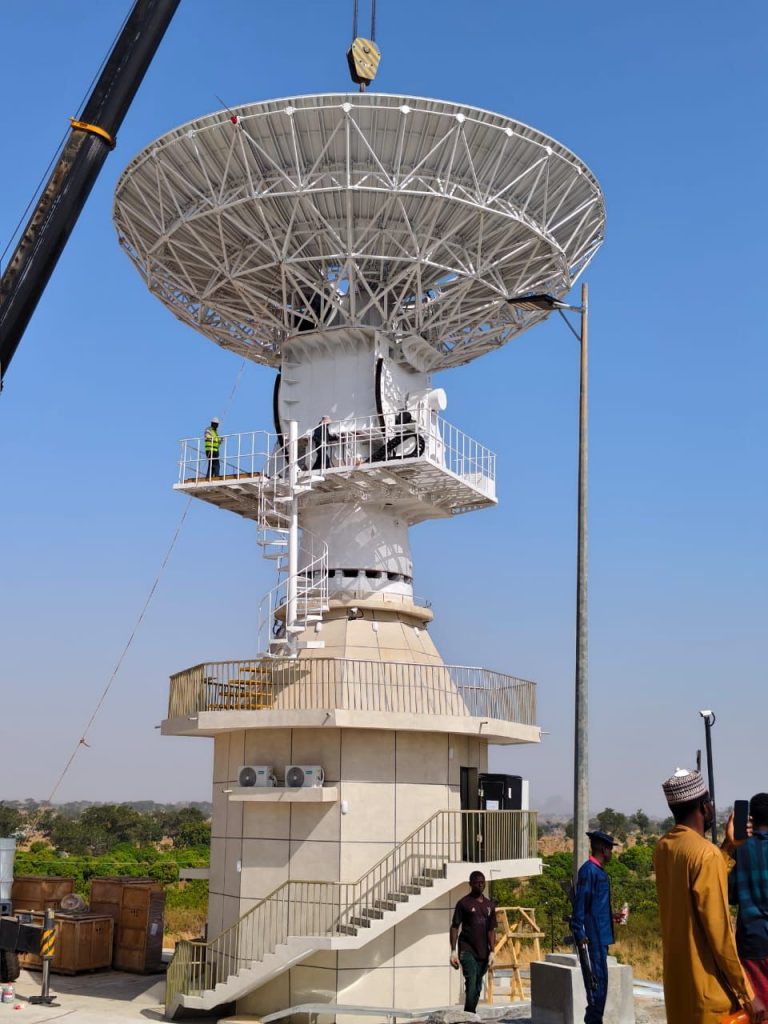
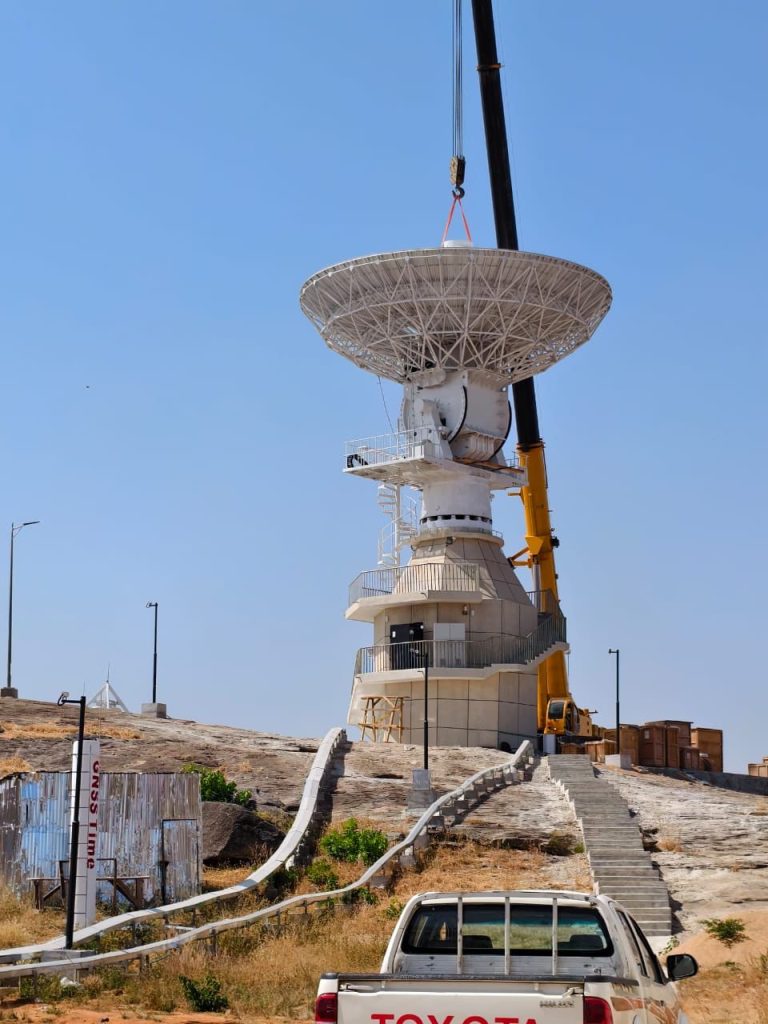
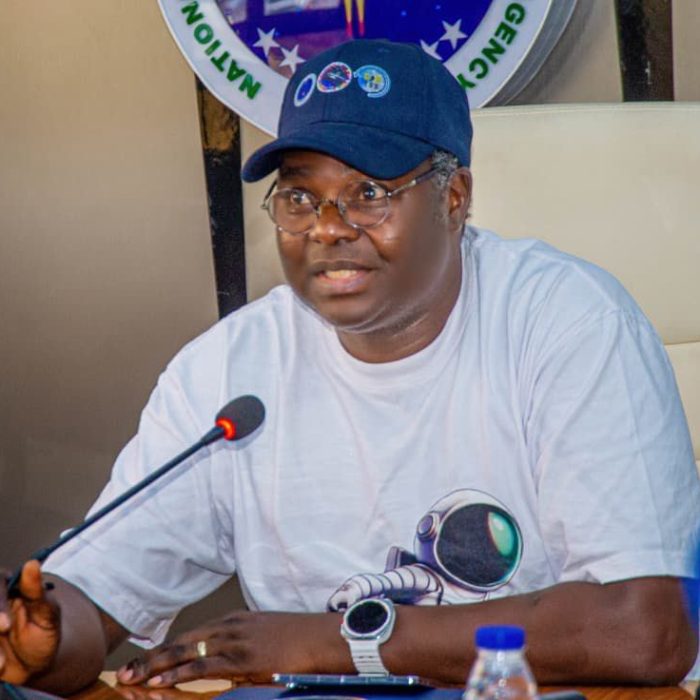
The National Space Research and Development Agency (NASRDA), under the dynamic and pragmatic leadership of its Director General and Chief Executive, Dr. Matthew Olumide Adepoju, has successfully hoisted the main antenna of Nigeria’s first Very Long Baseline Interferometry Global Observing System (VGOS) through its Centre for Geodesy and Geodynamics (CGG) in Toro, Bauchi State.
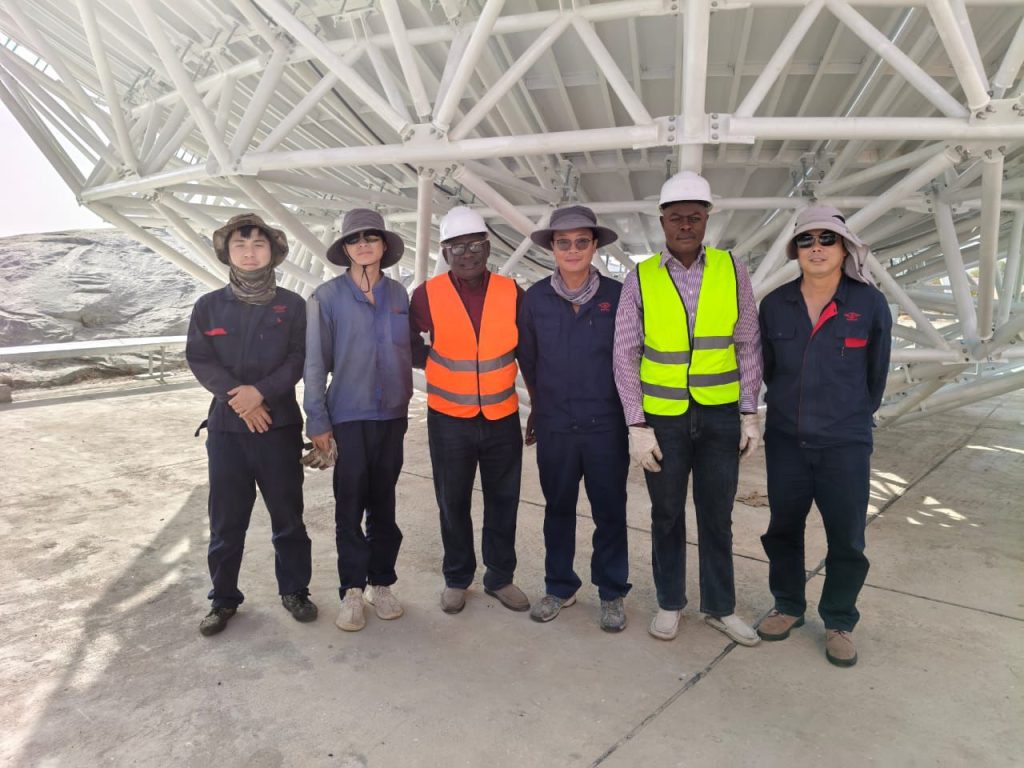
The project, executed in partnership with the Shanghai Astronomical Observatory (SHAO) of the Chinese Academy of Science, marks a historic first for West Africa and only the second installation of its kind on the African continent.
This groundbreaking milestone positions Nigeria among the world’s elite in the field of space geodesy and underscores the country’s growing capacity to drive scientific advancement across Africa.
The Director, Center for Geodesy and Geodynamics, CGG,Dr. Joseph Dodo, revealed that the installation required a 200-ton crane to lift the 80-ton antenna structure, elevating the VGOS facility to a towering 19.8 meters in height.
He described the feat as the completion of the main structural stage of the telescope, paving the way for its fine-tuning and scientific configuration.
Dr. Dodo further explained that the team will now embark on VLBI antenna photogrammetry, using advanced imaging techniques to generate 3D models for detecting structural shifts and ensuring the extreme precision required for global geodetic measurements.
The next phase of work includes installing a GNSS receiver, weather station, and holometry antenna, transforming the facility into a multidisciplinary research hub that will operate as part of the world’s synchronized network of radio telescopes.
With Nigeria now plugged into the global VGOS system, the country gains the capability to gather ultra-precise data used in determining Earth orientation parameters, tracking tectonic plate movements, evaluating continental drift, and refining terrestrial and celestial reference frames.
The system also strengthens contributions to astronomical timekeeping and climate research.
This achievement signals more than scientific progress by reflecting Nigeria’s firm resolve to champion Africa’s technological advancement and secure a prominent place in the international scientific community.
Reporter: Daniel Abdullahi
Editor: Joy Opaluwa
Media and Corporate Communications