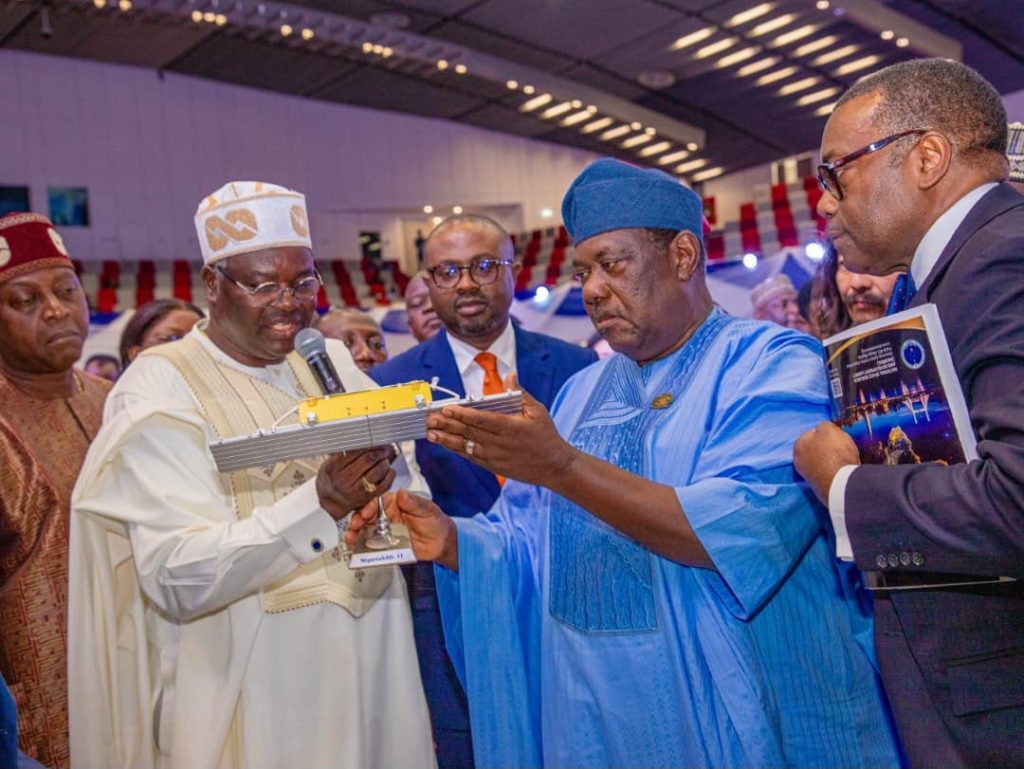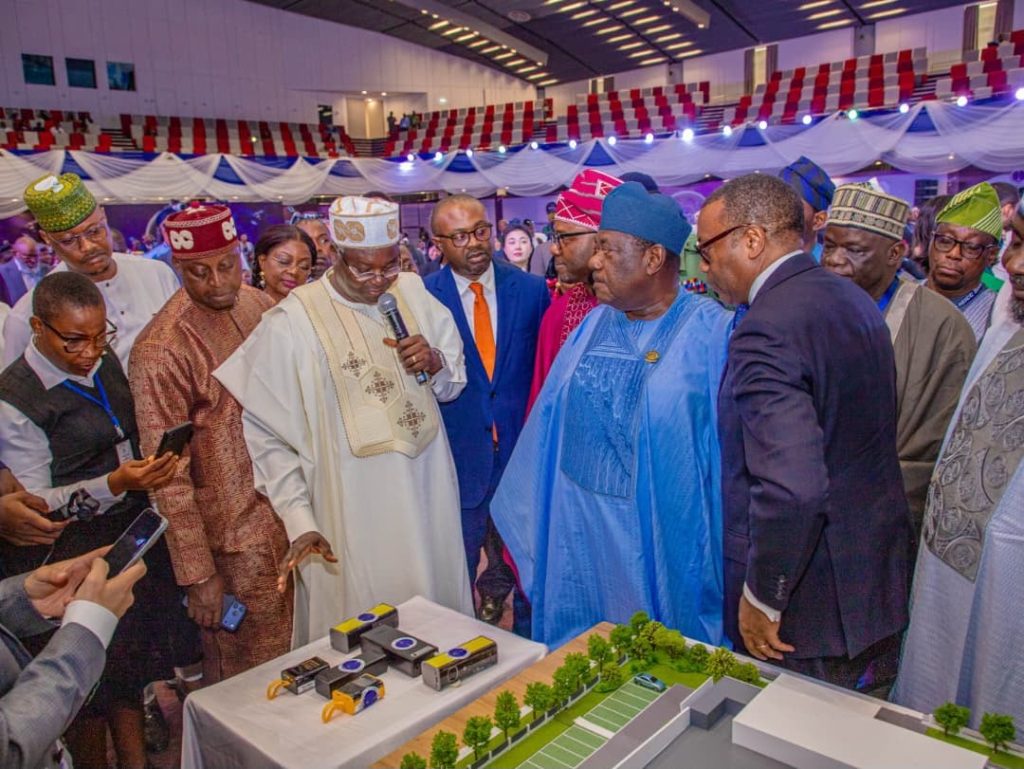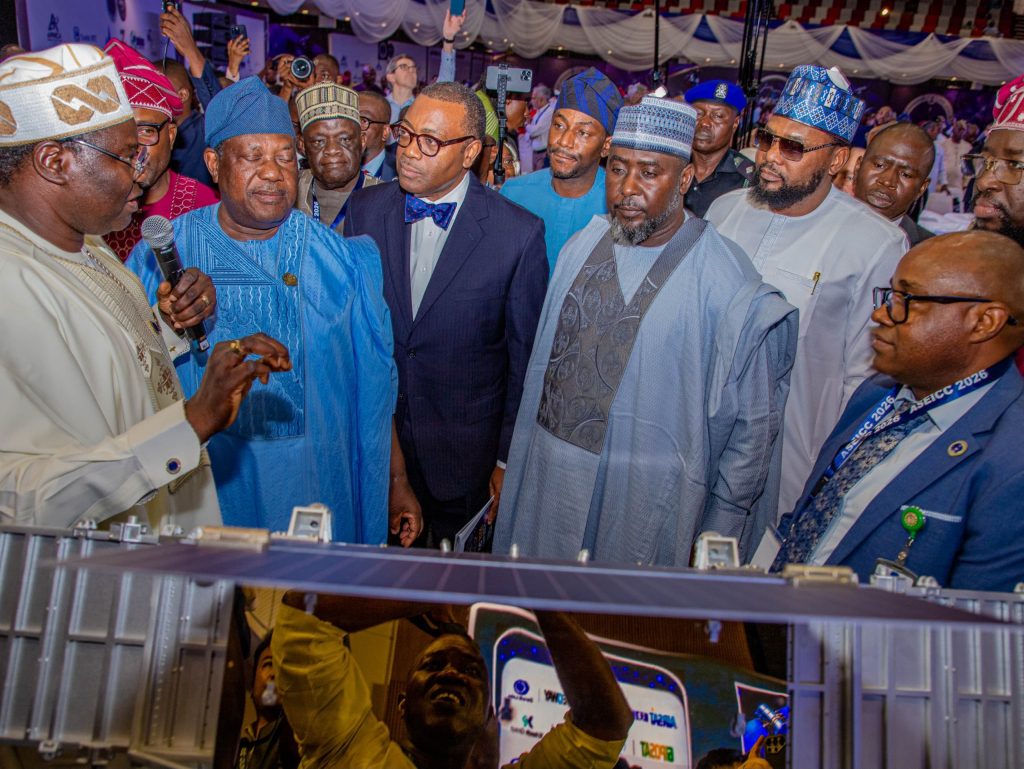

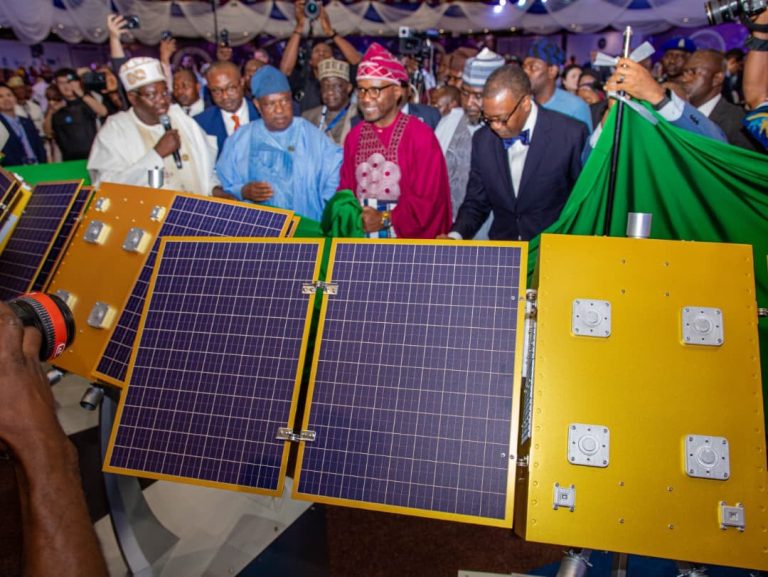
Nigeria has taken another step towards strengthening its indigenous space technology capabilities with the unveiling of new Nigerian Satellite Models, the Assembly, Integration and Testing (AIT) Building, as well as the NASRDA Ground Station and Mission Control Centre at the Africa Space Economy, Innovation and Communication Conference (ASEICC 2026) in Abuja.
The unveiling reflects the National Space Research and Development Agency’s (NASRDA) commitment to advancing indigenous satellite development, strengthening space infrastructure and expanding Nigeria’s capacity to deploy space-based solutions for national development.
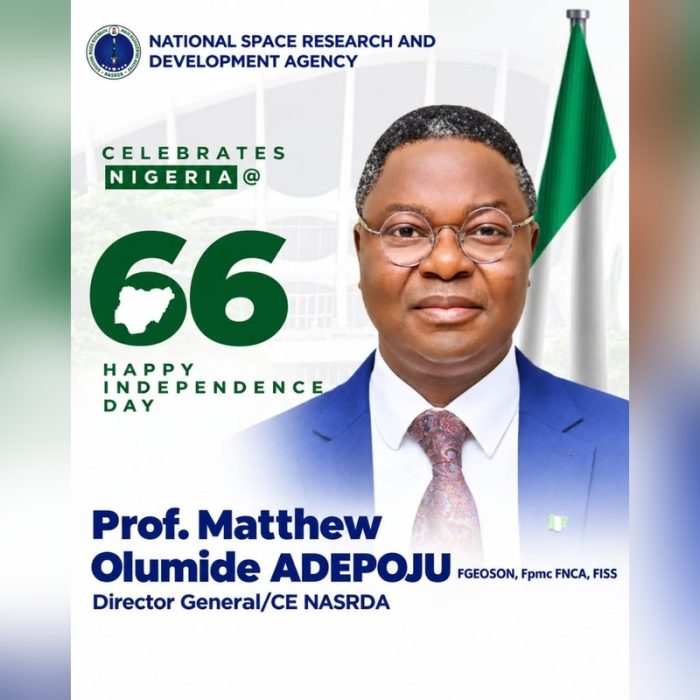
Speaking on the features of the newly unveiled satellite models, the Director General and Chief Executive of NASRDA, Professor Matthew Adepoju, explained that the proposed satellite constellation includes Synthetic Aperture Radar (SAR) satellites capable of capturing images during the day and at night, including under cloudy conditions.
He said the radar technology would be particularly useful for monitoring illegal activities and strengthening national security through surveillance of areas of interest.
The constellation also features high-resolution optical Earth observation satellites designed to capture detailed images of objects on the ground, providing critical data for applications in agriculture, environmental monitoring, disaster management, infrastructure development and security.
Professor Adepoju further disclosed that the satellites would incorporate Artificial Intelligence (AI) and onboard processing capabilities to support image acquisition, data processing and transmission in real time, enabling faster responses to disasters and other emergencies.
The unveiling also showcased the Agency’s Assembly, Integration and Testing (AIT) Building, which represents an important component of Nigeria’s efforts to strengthen local capacity in satellite development.
The facility provides the infrastructure required for the assembly of satellite components, integration of onboard systems and rigorous testing before deployment into space.
Also unveiled were the NASRDA Ground Station and Mission Control Centre, key infrastructure supporting the country’s space programme and its capacity to manage satellite missions and related operations.
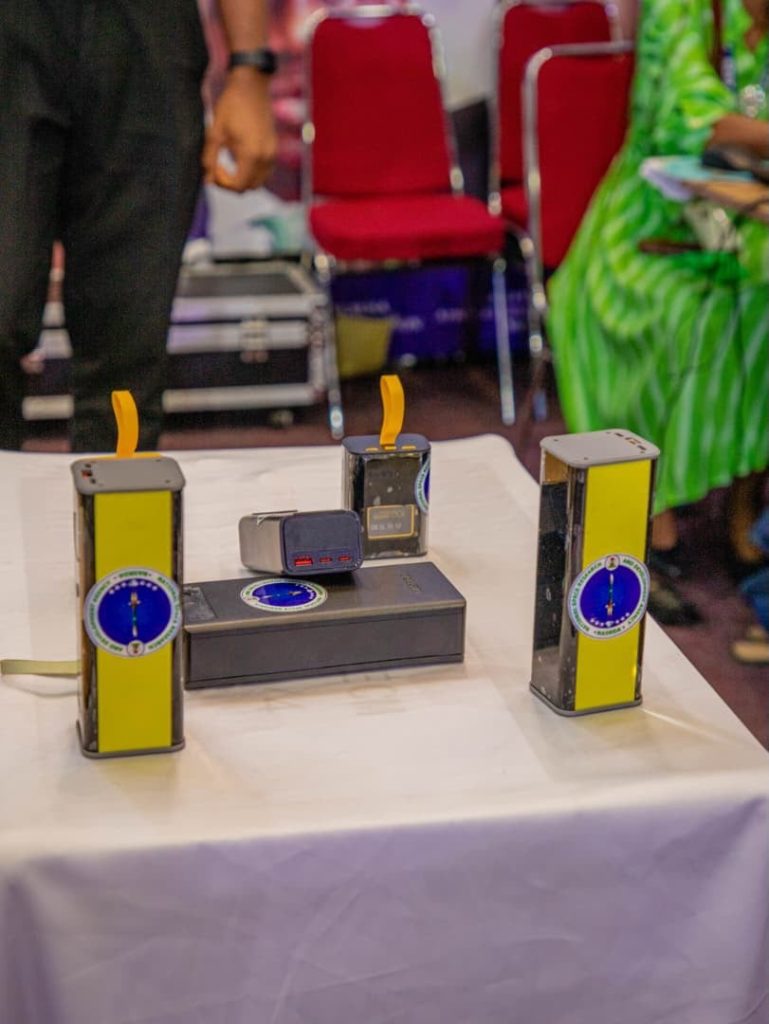
Drawing attention to the Agency’s interest in emerging materials and next-generation energy solutions, Professor Adepoju also showcased a graphene-powered power bank, describing graphene as a technology with enormous potential.
He disclosed that the power bank delivers up to three times the power of conventional lithium-based batteries, underscoring the importance of exploring emerging technologies to advance Nigeria’s technological capabilities.
The unveiling formed part of the activities of ASEICC 2026, which brought together stakeholders in the space sector to explore opportunities for innovation, collaboration and the growth of Africa’s space economy.
Below are pictures from the unveiling.
Reporter: Oluwaseun Ajayi
Editor: Joy Atama-Opaluwa
Photo Credit: Ibrahim Zakari
Media and Corporate Communications Department